American Black Duck
Anas rubripes
Alternate names: Red-legged Duck (historical), Dusky Duck (historical)
- Length
- 21-23 in
- Weight
- 1.6-3.6 lb
- Wingspan
- 35-37 in
- Range
- Primarily the Atlantic Flyway: breeds across eastern Canada, winters along the coast
Overview
A dark duck of Atlantic salt marsh and tidal creeks. The Atlantic Flyway supplies about 80 percent of the harvest, and west of the Mississippi River one is rare. American Black Ducks winter in coastal marsh from Nova Scotia to the mid-Atlantic and retreat to quiet freshwater impoundments under pressure. They are shy of disturbance and jump nearly straight up off the water. The USFWS sets the daily limit under its own framework, so check your state regulations.
- Drakes often leave their mates mid-incubation and head north to molt
- Closely related to the Mallard and prone to hybridizing with it
- US harvest fell from about 800,000 a year in the 1960s to about 80,000
How to ID It
- Near-black body, with a pale gray head crossed by a dark eye stripe
- Violet speculum with little or no white border, unlike a Mallard's
- In flight: Bright white underwings flash against a dark body
- No white in the tail and no pale belly, unlike a hen Mallard
- Drake: Yellow to greenish-yellow bill with a black nail
- Hen: Dull olive bill with a dusky center stripe, never orange
Identification


American Black Ducks are Mallard-sized and a little larger than a Gadwall, with the same heavy build: a round head, a thick bill and the tail carried high on the water. The profile matches a Mallard's so closely that shape settles little, and the dark overall tone does the work at range. They jump nearly straight up off the water and fly heavily on broad wings, usually in small flocks with Mallards often mixed in. They are warier than Mallards and flare at the slightest movement.
Head
A pale head on a dark body is the tell.
The head and neck are pale gray with fine streaking, set off by a dark crown, nape and eye stripe. Drake and hen look alike here. A hen Mallard is warmer brown overall and has no matching contrast between a pale head and a dark body.
Bill
Greenish yellow on the drake, dull olive on the hen.
Drake bills run yellow to greenish yellow with a black nail, often with a dusky spot at the base corner. Hens carry a drab olive-gray bill with blackish marking along the middle. Orange never appears on either sex, so an orange-and-black bill belongs to a hen Mallard.
Wing
A violet speculum with little white to see.
The speculum is purple-blue to violet on dark brown wings, with a black leading edge and a narrow white trailing edge, or none. A hen Mallard's blue speculum has bold white borders. From below, white wing linings against the dark body are the best clue at long range.
Body
Heavy and uniformly dark, with the tail up.
A large, heavy-bodied dabbler with a round head and thick bill, in a profile nearly identical to a Mallard's. The blackish-brown feathers are edged paler, with U-shaped marks on the drake's breast and V-shaped marks on the hen's. The hen is paler overall but still far darker than a hen Mallard.
Drake
The drake keeps nearly the same dark plumage all year, and his legs are bright reddish orange, brightest from November through March. Eclipse is brief and subtle, since the breast only loses its U-shaped marks. Mallard drakes in eclipse also carry an olive-yellow bill like his, but they keep a cinnamon wash on the breast.
Hen
The hen is the paler sex, with duller orange-brown legs and a warm brown eye. To pick her out from brown Mallard hens, look for the missing pale belly and white-edged tail, and for a speculum with no bold white borders. A hen with some white in the tail or a green patch on the head is likely a Mallard hybrid.
Key Facts
- Relative Size
- Same size as a Mallard, larger than a Gadwall
- Bill Color (Drake)
- Yellow to greenish-yellow
- Bill Color (Hen)
- Dull olive, dusky center
- Primary Habitat
- Salt marshes, tidal creeks, estuaries
- Breeding Habitat
- Beaver ponds, bogs, freshwater marshes
- Winter Habitat
- Coastal salt marsh, bays, flooded timber
- Migration Pattern
- Short-distance migrant; leaves September-October
- North America Status
- Atlantic Flyway bird; near recent average
- Table Fare
- Good inland; coastal birds salty
Calls
A hen American Black Duck's quack matches a hen Mallard's, so Mallard calls work. Keep it light on salt marsh, especially once birds are working close, because these ducks study a spread before they commit.
Drake
The drake's voice is a reedy "reab" or "raeb", close to a Mallard drake's and also written "kwek-kwek". A single note is an alert, and a two-note "raeb-raeb" is a sexual or conversational call. In courtship he adds a flutelike whistle.
Hen
The hen's quack is the same loud, familiar one a hen Mallard gives. Her classic call is a descending run of about six quacks, the second accented, that fades in volume and comes mostly in the morning and evening. A harsh "gaeck" is her call when she is pursued.
When You'll Hear Them
Pairs form in fall and winter, so courtship calling carries into the hunting season. The hen's fading quack series comes mostly in the morning and evening, and the drake's whistle belongs to the same display period. At first and last light, listen for hen quacks.
Range
A northeastern duck, from Hudson Bay down to Chesapeake Bay.

Hunters meet American Black Ducks first in the Atlantic Flyway, with fewer in the Mississippi Flyway. In October, fall birds stage on Lake Erie and in a belt from New Brunswick through the St. Lawrence Valley to northern Michigan.
Year-Round
Most American Black Ducks migrate, but a small non-migratory group lives in coastal wetlands from New Jersey to North Carolina. Parts of Maryland, coastal Massachusetts, Wisconsin, Nova Scotia and Prince Edward Island also hold resident birds, as do southwestern British Columbia and Snohomish County, Washington.
Breeding
Breeding is centered on northeastern North America: northeastern Manitoba along Hudson Bay, Ontario, Quebec, Labrador, the Maritimes and Newfoundland. In the US it reaches south from the Canadian border to northern Minnesota, Wisconsin and Michigan, northern Ohio, and the coastal plain of Virginia and North Carolina.
Winter
Most American Black Ducks winter in the southern part of the breeding range, south to the Gulf Coast and northern Florida. New Jersey and the Chesapeake Bay area hold many, and more now winter in Maine and Nova Scotia. Inland birds reach eastern Iowa, Missouri, and eastern Arkansas and Mississippi.
Migration Timing
American Black Ducks are short-distance migrants that fly mostly at night in small flocks. Birds from northern Ontario and Quebec leave in early September, and most reach New Jersey, Delaware and Maryland by early November. Spring flights start in February, and most birds are moving by early April.
Ducks Similar to the American Black Duck
American Black Duck vs Mallard Hen
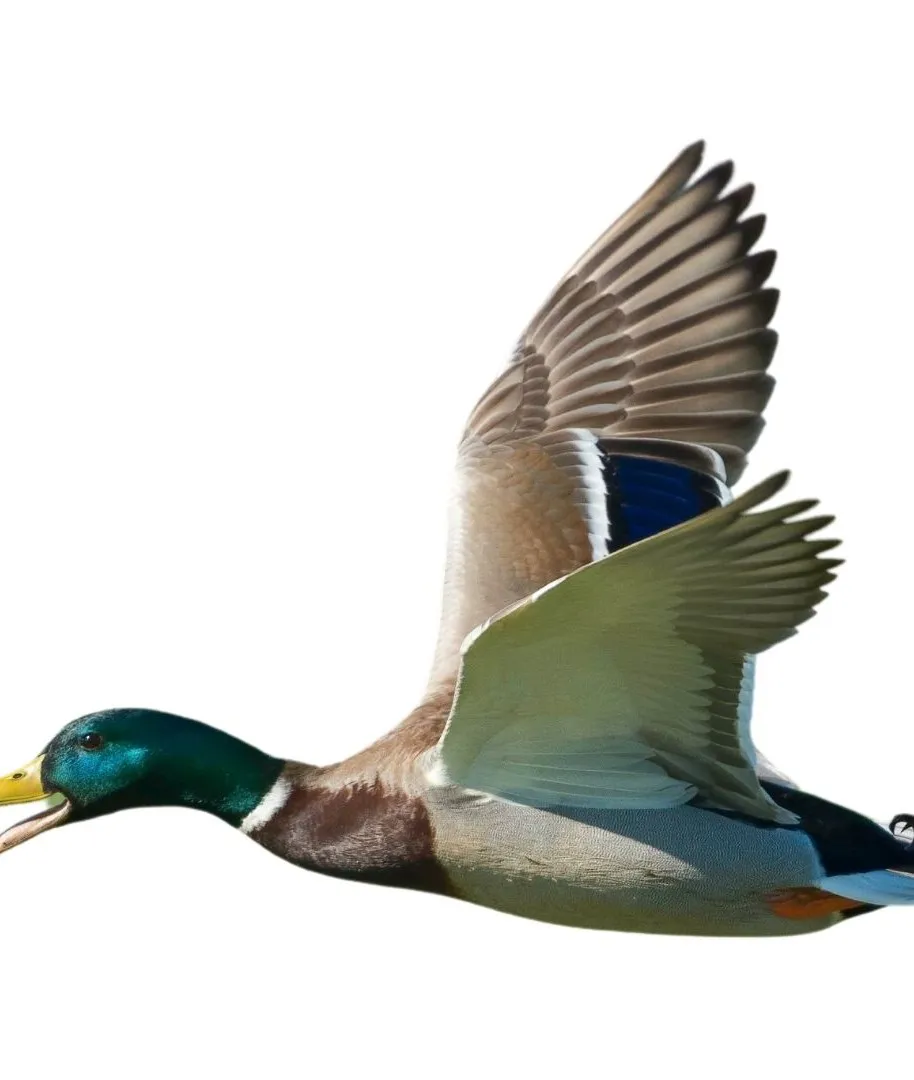
Near-black with a violet speculum and almost no white border, a Black Duck reads darker than a Mallard hen, which is warmer brown with a buff, white and dark pattern, an orange-and-black bill and a pale belly.
American Black Duck vs Mottled Duck
A dark spot at the bill base and a blue-green speculum mark the Mottled Duck, whose buffy head is lighter than its body. The Black Duck's speculum is violet, and its bill has no spot.
American Black Duck vs Mexican Duck
Paler, warmer brown and a blue-green speculum with a narrow white edge at the back identify a Mexican Duck. The Black Duck's violet speculum has little or no white border.
American Black Duck vs Gadwall
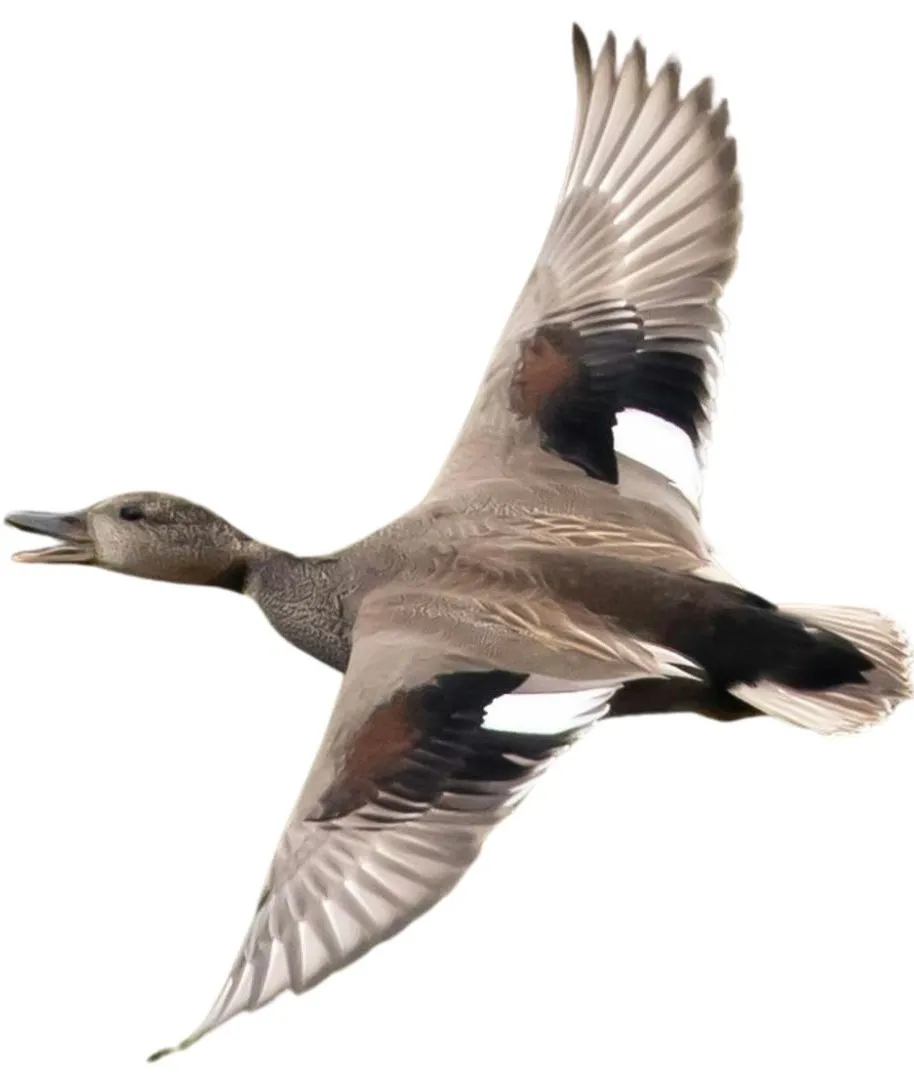
A Black Duck shows no white in the speculum and flashes white underwings against a near-black body. A Gadwall looks gray or buff-tan, with an orange-edged bill and a white patch on the inner secondaries.
American Black Duck vs American Wigeon Hen
Below a pale gray head, a Black Duck is near-black. In a wigeon hen, warm brown plumage comes with a white belly and, in flight, a whitish forewing patch.
American Black Duck vs Northern Shoveler
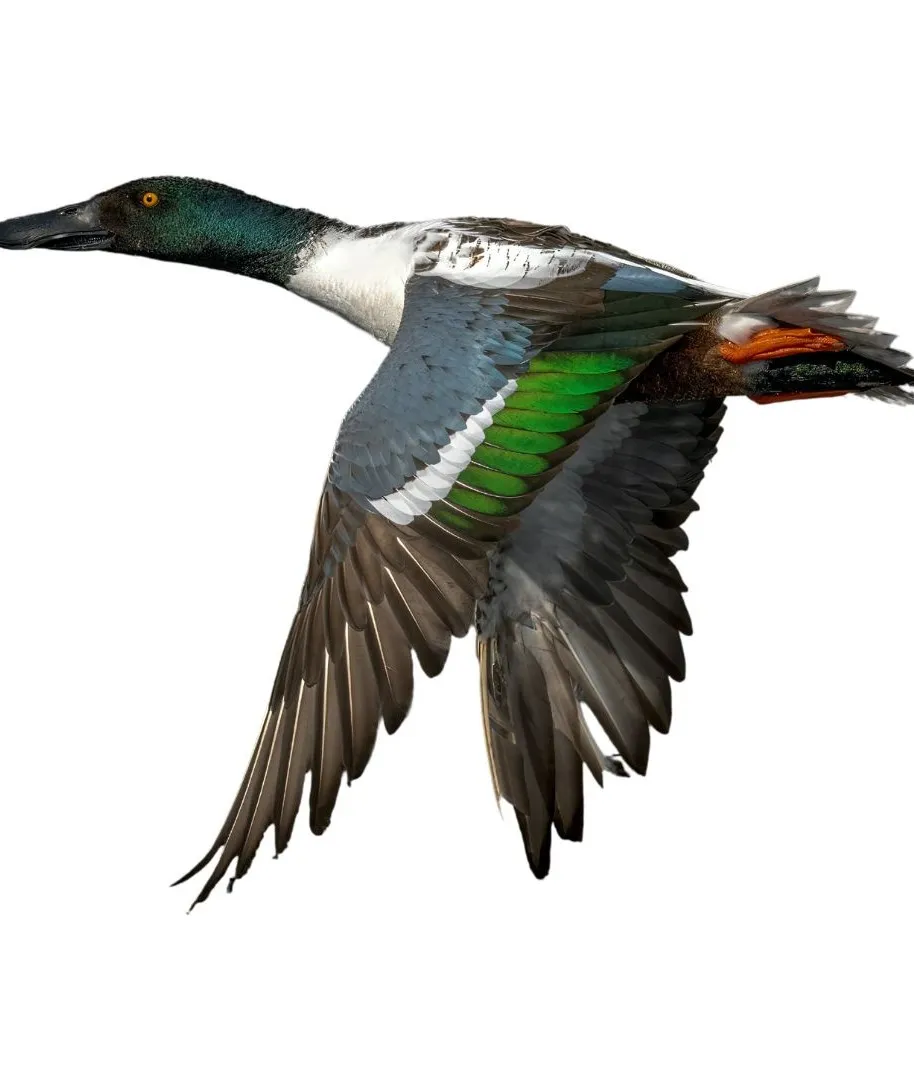
Shovelers carry a spoon-shaped bill that shows at long range, and a powder-blue forewing patch in flight. A Black Duck has a plain bill and dark wings with a violet speculum.
Habitat
Primary Habitat. American Black Ducks use both fresh and salt water. Inland they use beaver ponds, brooks lined with speckled alder, shallow lakes with reeds and sedges, boreal bogs and wooded swamps. On the coast they use salt marsh, tidal creeks and protected bays. They use salt marsh and open salt water more than Mallards do.
Seasonal Habitat Differences. Breeding birds favor freshwater wetlands. Nests sit on the ground in uplands, on grassy or wooded islands and along field edges, well hidden. In winter most birds move to salt and brackish marsh and protected bays. Inland, wintering birds use freshwater wetlands, flooded timber, rivers and waste-grain fields, and they take refuge from hunting pressure in fresh and brackish impoundments.
What to Look For. Protected salt marsh, tidal creeks and ponds, and quiet impoundments. In the north, check beaver ponds. In a marsh shared with Mallards, the dark ducks on the saltier water are the ones to glass.
Is the American Black Duck Good to Eat?
It depends on what the bird ate. American Black Ducks from freshwater marsh and grain fields eat much like Mallards. Coastal birds that fed on crustaceans and other marine animals can taste fishy or salty. Field & Stream says skinning the bird, removing the fat and brining helps with those birds.
Frequently Asked Questions
How do you identify an American Black Duck?
A pale gray head, finely streaked, on a near-black body is the tell. In flight the speculum is violet with little or no white border, and bright white underwings flash against the dark body. The tail shows no white. The drake's bill is yellow-green and the hen's is dull olive, never orange.
How rare is an American Black Duck?
American Black Ducks are fairly common in the Atlantic Flyway, with far fewer than Mallards. About 739,000 bred in the eastern survey area in 2026 (USFWS), near the recent average. Hunters meet them in Atlantic coastal marsh and the eastern Mississippi Flyway, and a sighting west of the Mississippi River is unusual.
Are American Black Ducks good to eat?
Good inland, less so on the coast. Birds from freshwater marsh and grain fields eat much like Mallards, while coastal birds that fed on crustaceans can taste fishy or salty. The one source found is Field & Stream, which advises skinning, trimming the fat and brining the coastal ones.
How do you tell an American Black Duck from a Mallard?
An American Black Duck is near-black under a pale gray head, with a violet speculum and almost no white border. A Mallard hen reads lighter and warmer, with a buff-and-brown pattern, an orange-and-black bill, a pale belly and a blue speculum edged in bold white. The American Black Duck's bill is olive.
How do you tell a drake American Black Duck from a hen?
The sexes look close alike, with a few differences. The drake's bill is yellow to greenish-yellow, and his legs are at their brightest, a reddish orange, from November through March. The hen's bill is dull olive with a dusky center and her legs are duller orange-brown. She is also the paler bird, though still far darker than a hen Mallard.
What does an American Black Duck sound like?
A hen American Black Duck's quack matches a hen Mallard's, a descending run of about six quacks that fades, given mostly morning and evening. The drake makes a reedy "reab", close to a Mallard drake's, and a flutelike whistle in courtship. Keep calling light on salt marsh, since these ducks study a spread before they commit.
Are American Black Ducks bigger than Mallards?
No. They are about the same size, and the profile is nearly identical, so shape settles little. American Black Ducks run 21-23 in long and Mallards 20-26 in. Color does the work at range: an American Black Duck looks near-black beside a Mallard, with white underwings flashing in flight.
In the Field

Secluded BackwaterBlack Ducks favor quiet, sheltered water over open marsh. 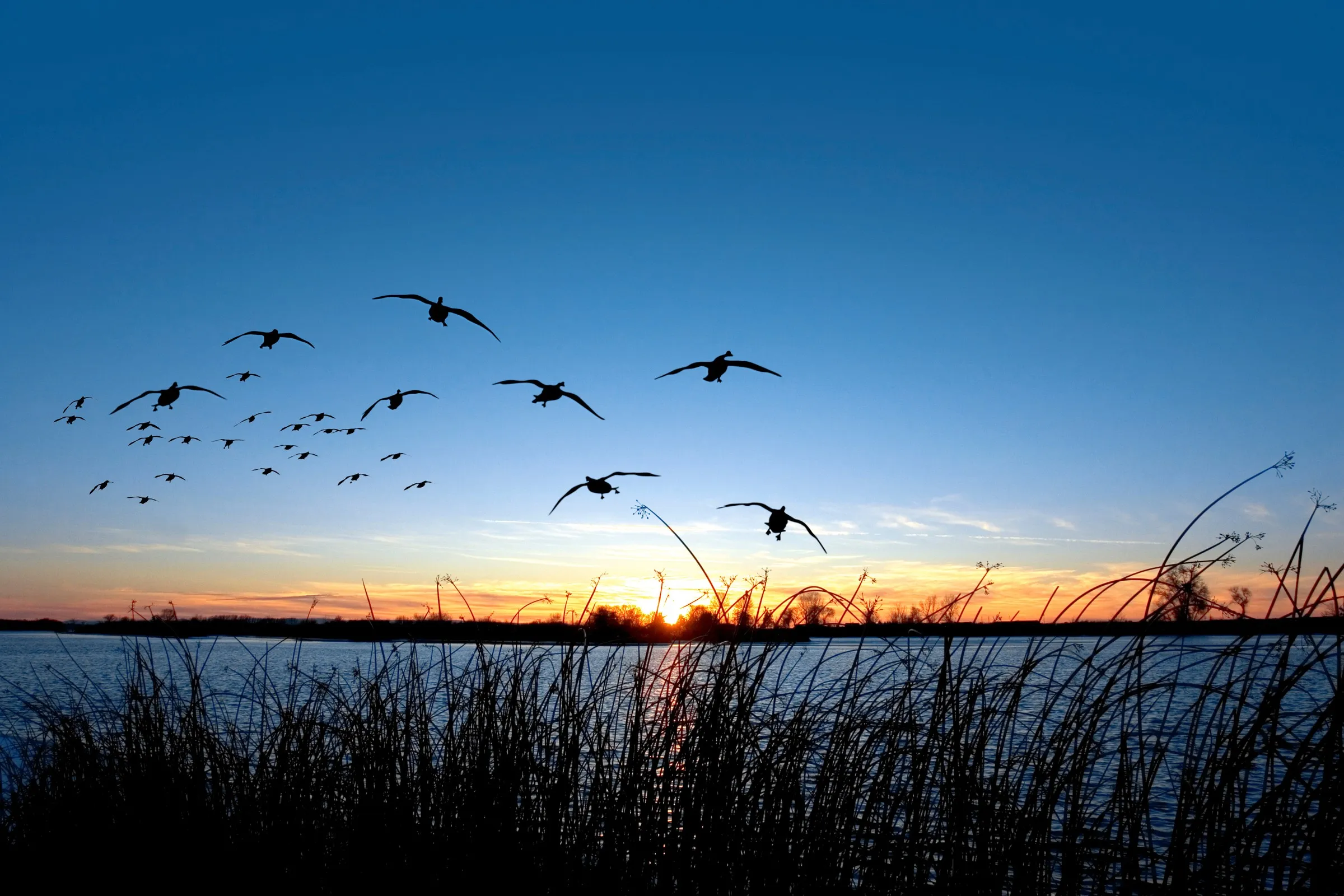
Flock at DuskSilhouettes at last light, exactly when a clean ID gets hard. 
Low-Light SilhouetteWary and quick to flare, even in poor light. 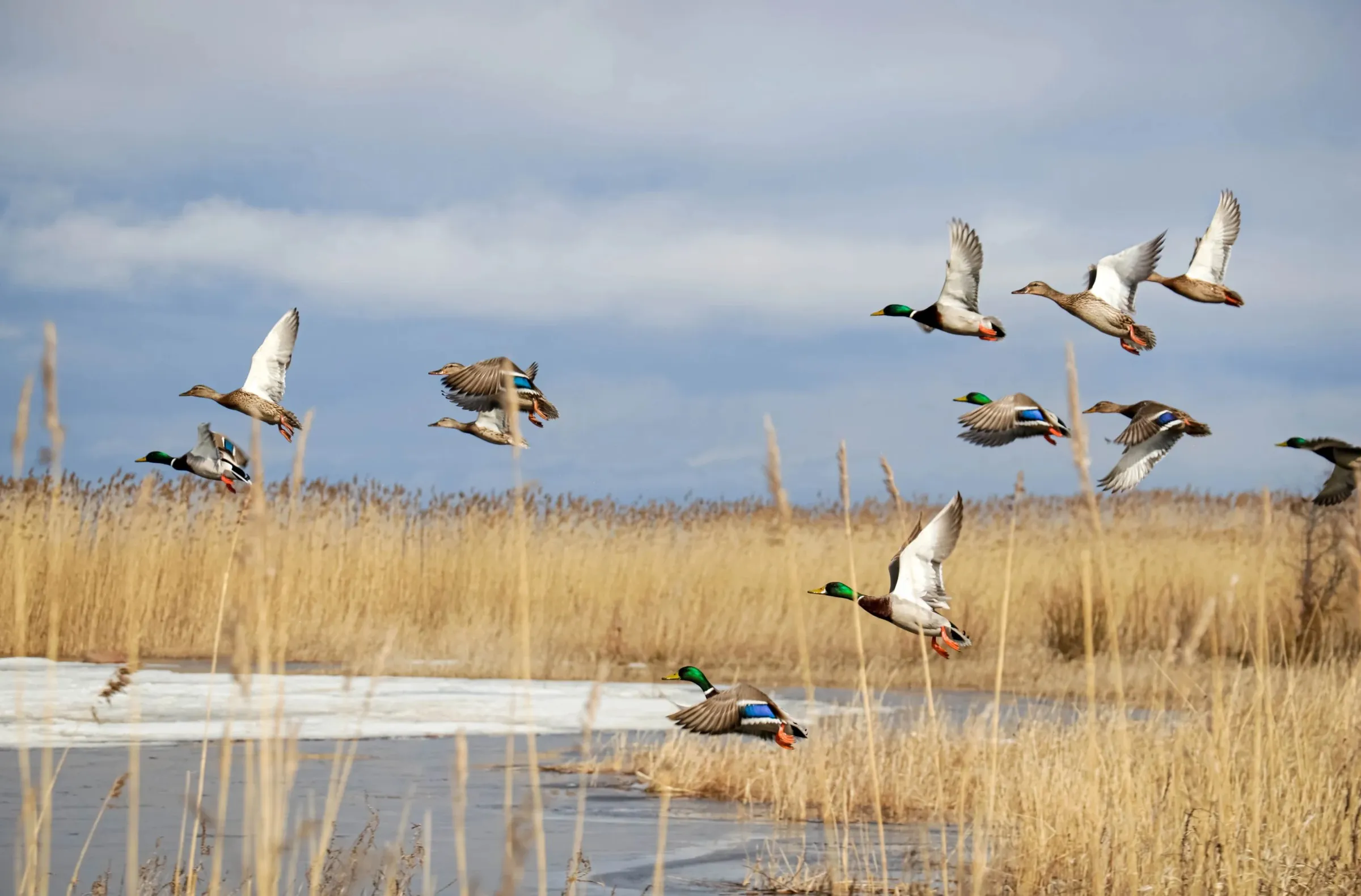
Mixed CompanyBlack Ducks often mix with Mallards in the same raft.