American Wigeon
Mareca americana
Alternate names: Baldpate
- Length
- 17-23 in
- Weight
- 1.2-2.9 lb
- Wingspan
- 33 in
- Range
- All four flyways, with the heaviest winter counts in California and Texas
Overview
American Wigeon winter mostly in the Pacific Flyway, which holds more than half of the midwinter count, with California's Central Valley and the Texas Gulf Coast the biggest concentrations. They graze as much as they dabble, so look for them on flooded fields and short grass, and on shallow water with submerged plants and open water close by to rest on. The drake's whistle often gives a flock away before you see it. Atlantic Flyway hunters see far fewer, about 4 percent of the midwinter count.
- Steals food from coots and divers as they surface with plants
- Pressured birds feed in fields at night and raft on open water by day
- Spinning-wing decoys took disproportionately more American Wigeon than eight other dabblers in a study
How to ID It
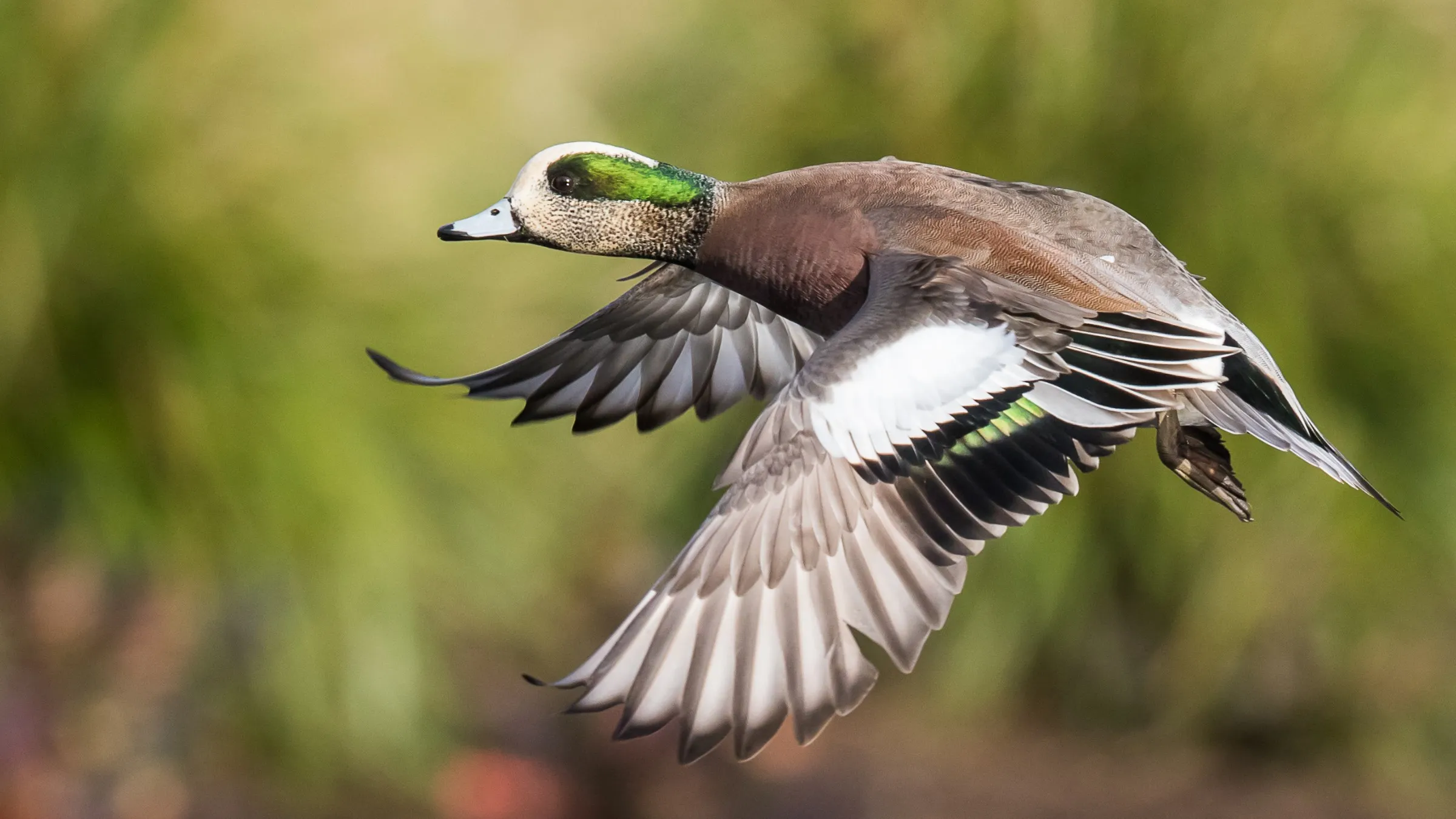
- Drake: White forehead and crown with a broad green patch behind the eye
- Round head and compact body, with the head pulled down into the shoulders
- Drake: White patch on each side of the rump against a black tail end
- Drake: Pinkish-brown breast and flanks over a white belly
- Hen: Warm brown with a grayish head and a dark smudge around the eye
- Short gray bill with a black tip; a hen Gadwall's bill is orange-edged
- In flight: Drake shows a bold white upperwing patch over a green speculum
- In flight: Hen's whitish wing patch and mostly dark speculum are duller and smaller than the drake's
Identification
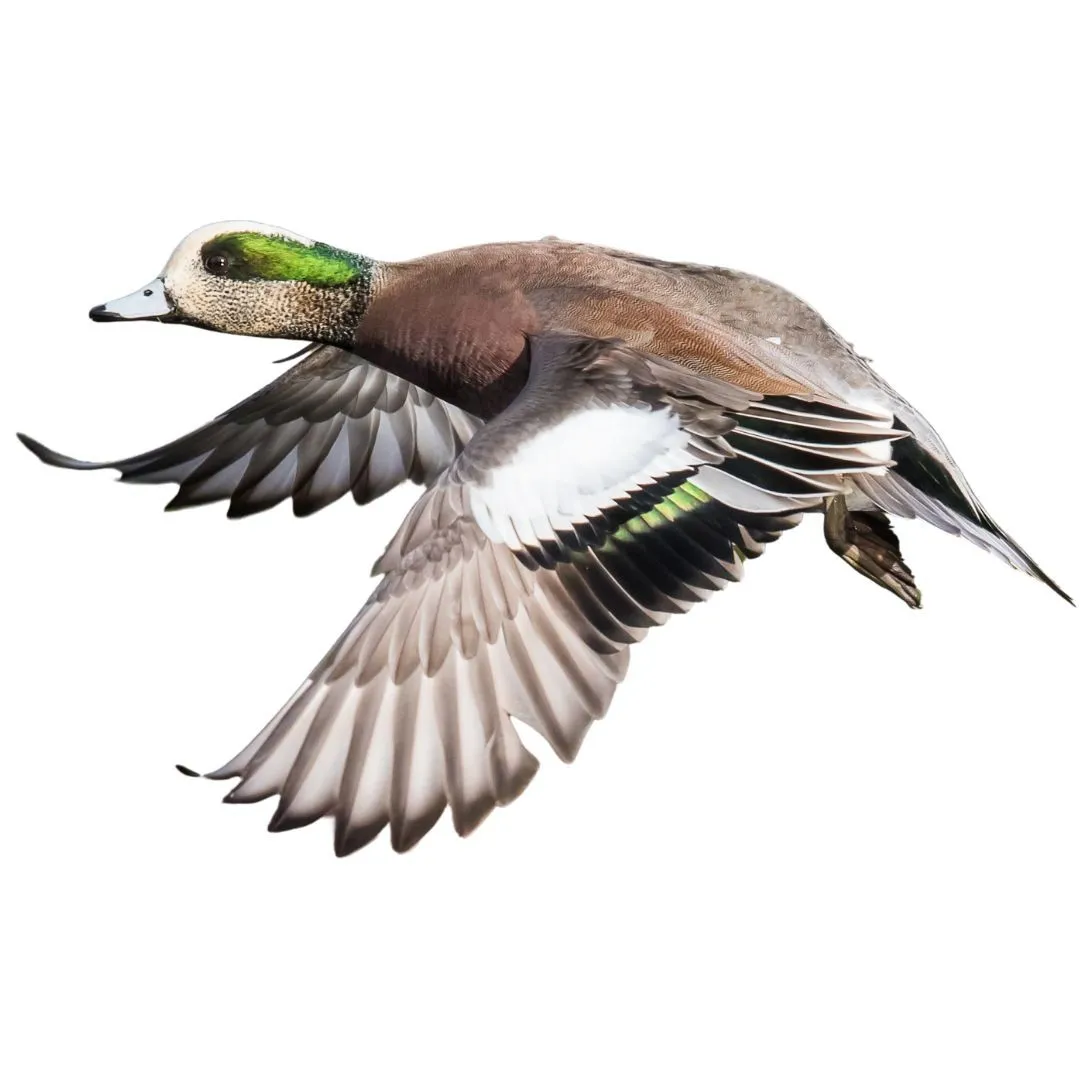
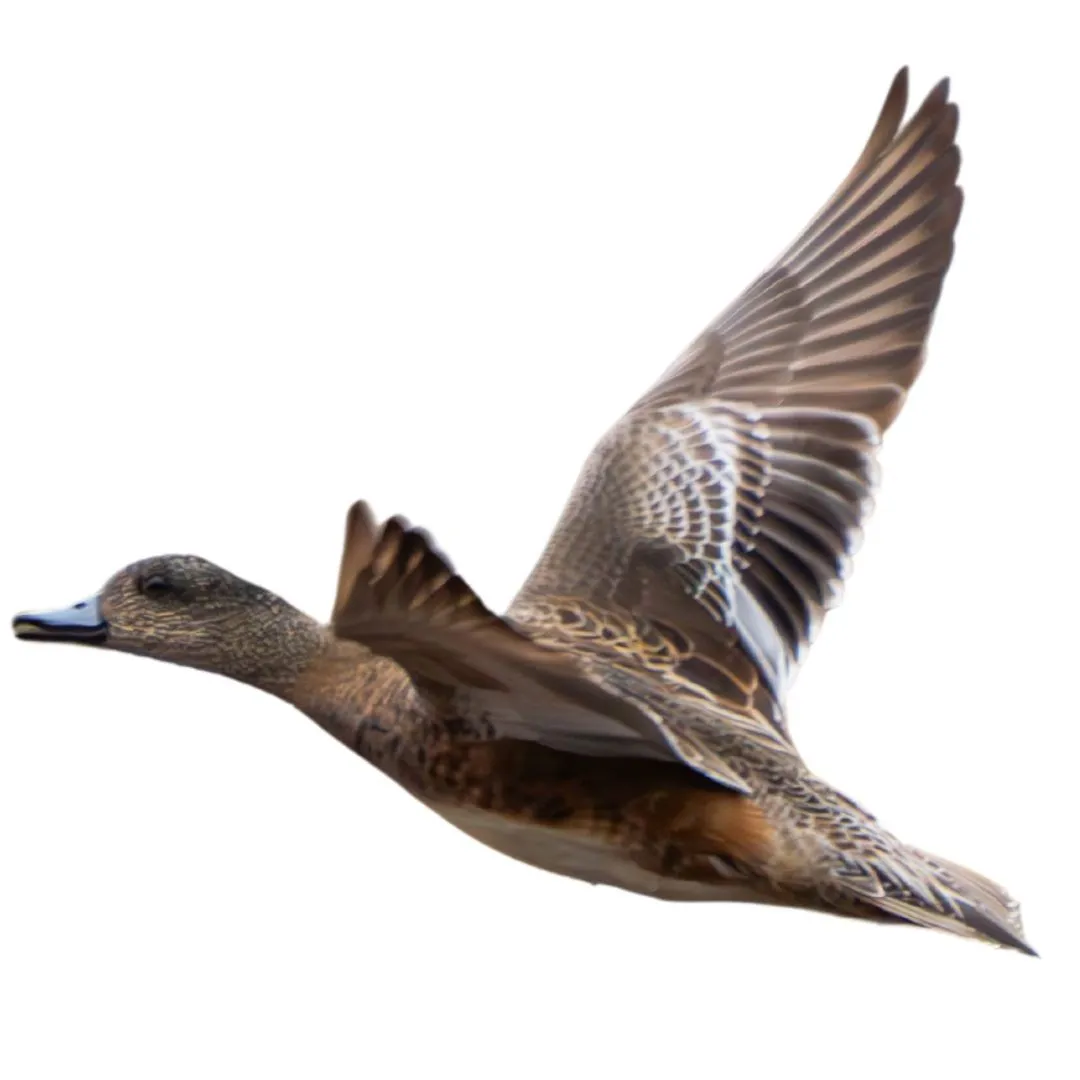
An American Wigeon is smaller than a Mallard and larger than a Green-winged Teal, a compact, short-billed duck. Fall flocks can pass 100 birds and often mix with Gadwall and Pintails. At range the drake's white forehead and the white patches at the sides of the rump stand out. The drake's whistle often gives a flock away before it is seen. On the water a Gadwall is the bird to rule out, and the wigeon is the rounder-headed one.
Head
A round head, and a white-capped drake you can pick out at distance.
The head is round, and the drake's crown is white, with a broad green patch behind the eye and buffy, black-speckled cheeks. The hen's head is brownish-gray with a plain face and a dark smudge around the eye. A hen Gadwall has a squarer head and an orange-edged bill.
Bill
Short, pale gray, black-tipped and goose-like.
Both sexes carry a short, narrow bill, pale bluish-gray with a black tip, more goose-like than most dabblers'. A hen Gadwall's bill is dark with orange along the edges, and a Mallard hen's is orange with black mottling.
Wing
A bold white patch on the drake, duller and smaller on the hen.
On the drake, white median and greater coverts show as a bold patch over a green speculum edged in black. The hen's whitish patch is poorly defined, and her speculum is mostly dark with traces of green, duller and smaller than his. The axillars are almost pure white, a check against Eurasian Wigeon.
Body
Pinkish-brown sides on the drake, warm brown on the hen, white belly on both.
The drake's breast and flanks are pinkish brown over a white belly, with a finely barred back. The hen is warm brown, with a reddish-brown breast and sides against the white belly. In eclipse the drake resembles a hen, but his upperwing coverts stay white. A Eurasian hen's flanks are duller.
Flight Patterns
American Wigeon erupt off the water, then fly fast and erratically.
American Wigeon flush easily and rise almost straight up off the water, then fly low in small irregular groups with quick turns. A bunched flock moves like pigeons. Only the teal fly more erratically than a wigeon.
Behaviour
American Wigeon graze on land and walk easily far from water.
American Wigeon walk and graze in fields, lawns, golf courses and parks, and they run easily far from water. They raft on open water until late afternoon, then move to marshes and ponds to feed, and they cover more ground between feeding stops than Gadwall, Mallards or Green-winged Teal.
Drake
Drakes are often in mixed plumage in September, as the molt back to color runs from mid-August to October. First-winter drakes look duller, with brown rump feathers. An eclipse drake looks like a hen but keeps the white upperwing coverts. In flight his white patch over a green speculum outshines any hen's. A Gadwall drake is plain gray with a black rear end.
Hen
A hen American Wigeon is the warm brown, round-headed duck in the flock, with a small gray bill. In flight she shows a white wing patch over a darker speculum, duller and smaller than the drake's. Young hens look like adults. Against a hen Gadwall she shows a rounder head and a shorter bill.
Key Facts
- Relative Size
- Smaller than a Mallard, larger than a Green-winged Teal
- Bill Color (Drake)
- Blue-gray, black tip
- Bill Color (Hen)
- Gray, darker tip
- Primary Habitat
- Marshes, ponds, lakes
- Breeding Habitat
- Prairie wetlands, boreal marshes
- Winter Habitat
- Coastal bays, lakes, fields
- Migration Pattern
- Early fall migrant; long distance
- North America Status
- Common and widespread
- Table Fare
- Mild; mostly plant diet
Calls
American Wigeon are talkative in fall and winter flocks, and the drake's three-note whistle is the sound to expect. A wigeon whistle is the call that works: use it sparingly, and stop if birds flare or climb out.
Drake
A slow, high, three-note whistle with the middle note highest, written "fi-ew-whew" or "whew-whew-whew", is the drake's call. It works as a contact call in big flocks and as a warning when danger is near. In aggressive encounters he cuts it to a faster single "whew".
Hen
The hen growls instead of whistling. Her call is a harsh, grating "kaow kaow" or "errr errr", with a soft, slowly repeated "errr" as an alarm and in flight. A nasal quack turns up now and then, but the long descending quack series of a Mallard hen is rare.
When You'll Hear Them
Drakes whistle all year, and American Wigeon are quite vocal outside the breeding season, with noisy groups in fall and winter. Courtship displays in winter flocks add to the noise. In season, expect whistles from drakes in rafts and passing flocks.
Range
American Wigeon nest farther north than most dabbling ducks.
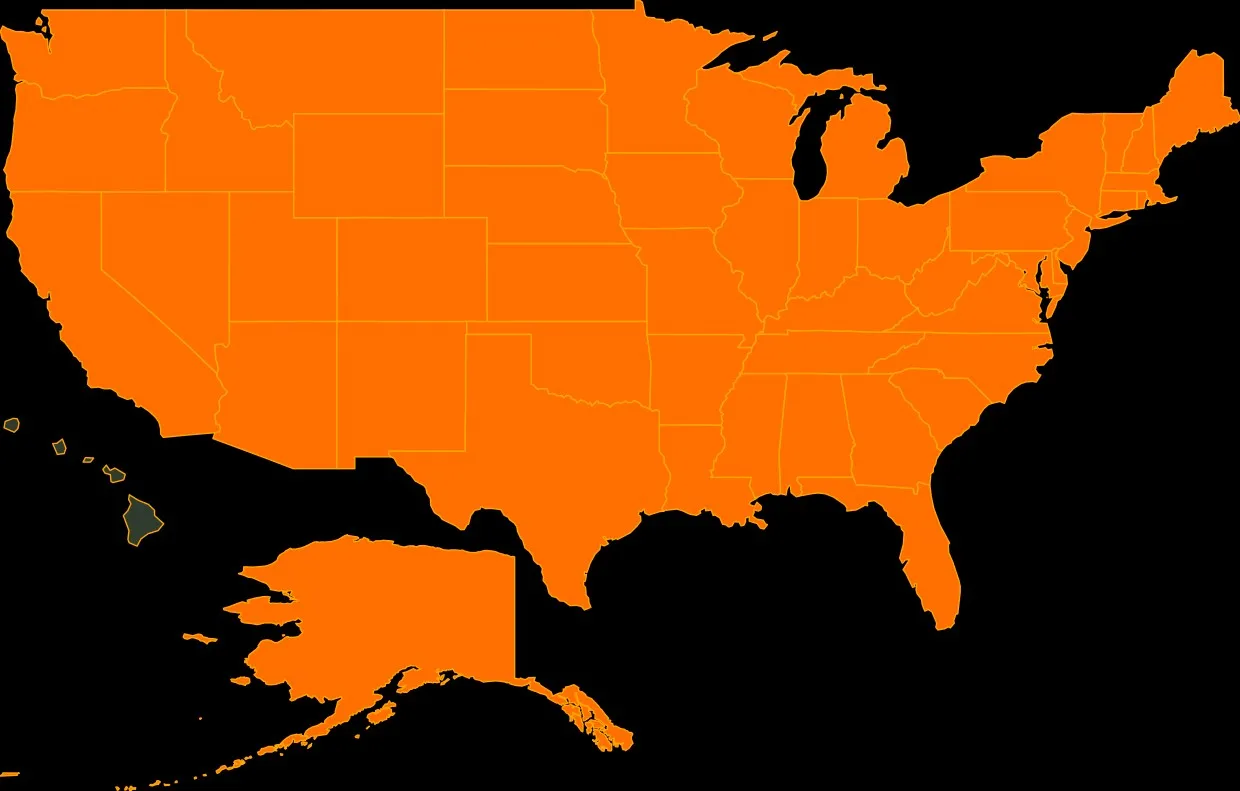
In northern states east of the Rockies, American Wigeon are plentiful until about mid-October and mostly gone by early November. In the Mississippi Flyway, 76 percent of the birds winter in Louisiana's coastal marshes, and Atlantic Flyway birds go mostly to North Carolina and Florida.
Year-Round
No area is documented as holding American Wigeon all year. A few birds winter inside the breeding range in the western US and Canada. Where that happens, the winter birds are different individuals from the breeders.
Breeding
American Wigeon are among the most northerly breeding dabblers, nesting on the tundra and boreal forest of Alaska and western Canada and south through the Prairie Pothole Region. Densities are highest in Alaska, the Northwest Territories, northeastern British Columbia and northern and central Alberta.
Winter
Midwinter surveys from 2000 to 2010 put 42 percent of American Wigeon in California, mostly the Central Valley, 26 percent in Texas, on the Gulf Coast and Panhandle playas, and 11 percent in Washington. Other dense areas are southwest British Columbia, Puget Sound and the southern High Plains.
Migration Timing
American Wigeon are among the earliest fall migrants. The first move south from Alaska and Canada in mid-August, with larger numbers in the last half of September, and drakes go first. Birds reach northern California in October. Spring departure starts in February and peaks April 1 to 15.
Ducks Similar to the American Wigeon
American Wigeon vs Eurasian Wigeon
A Eurasian Wigeon drake has a russet-red head with a cream crown and gray sides. Hens are near twins: check the armpit feathers, almost pure white on an American Wigeon and speckled gray on a Eurasian.
American Wigeon vs Gadwall Hen
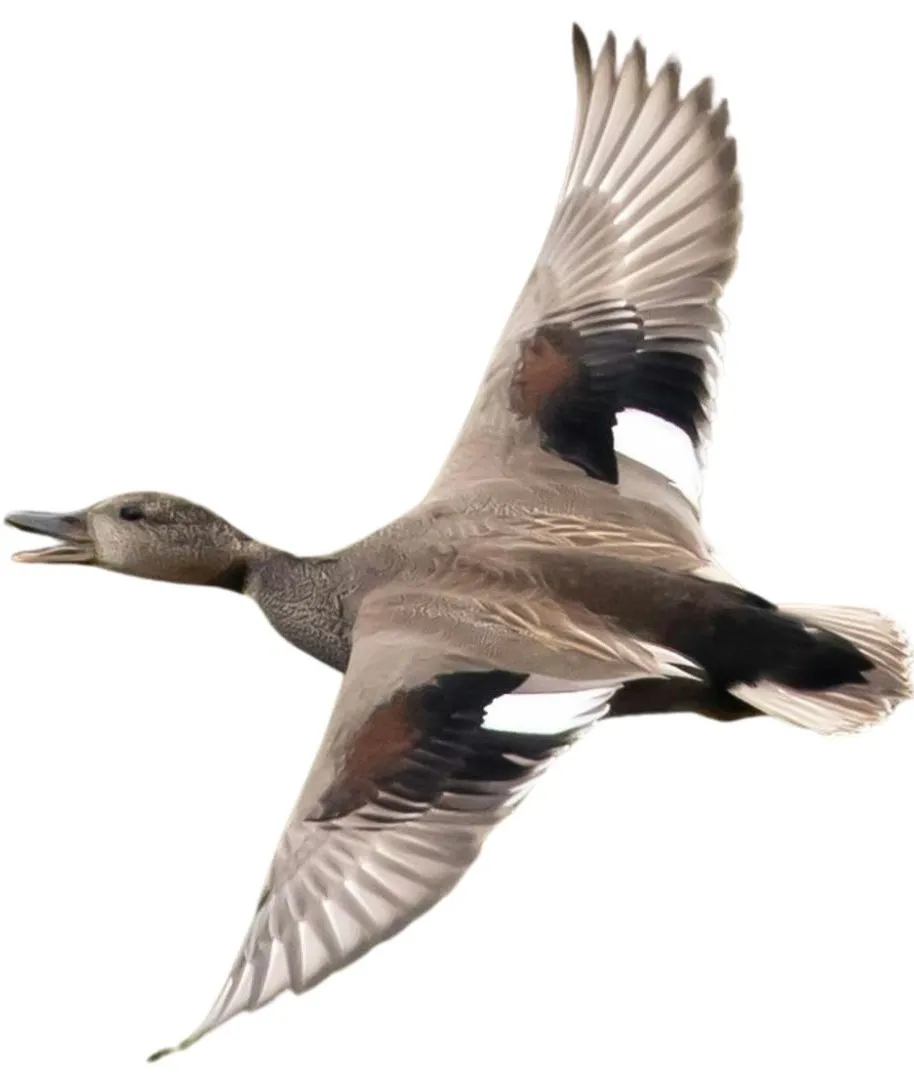
Check the bill first: a hen Gadwall's is dark with orange along the edges, and her head is squarer. The wigeon hen has a short gray bill tipped black and a rounded head.
American Wigeon vs Northern Pintail
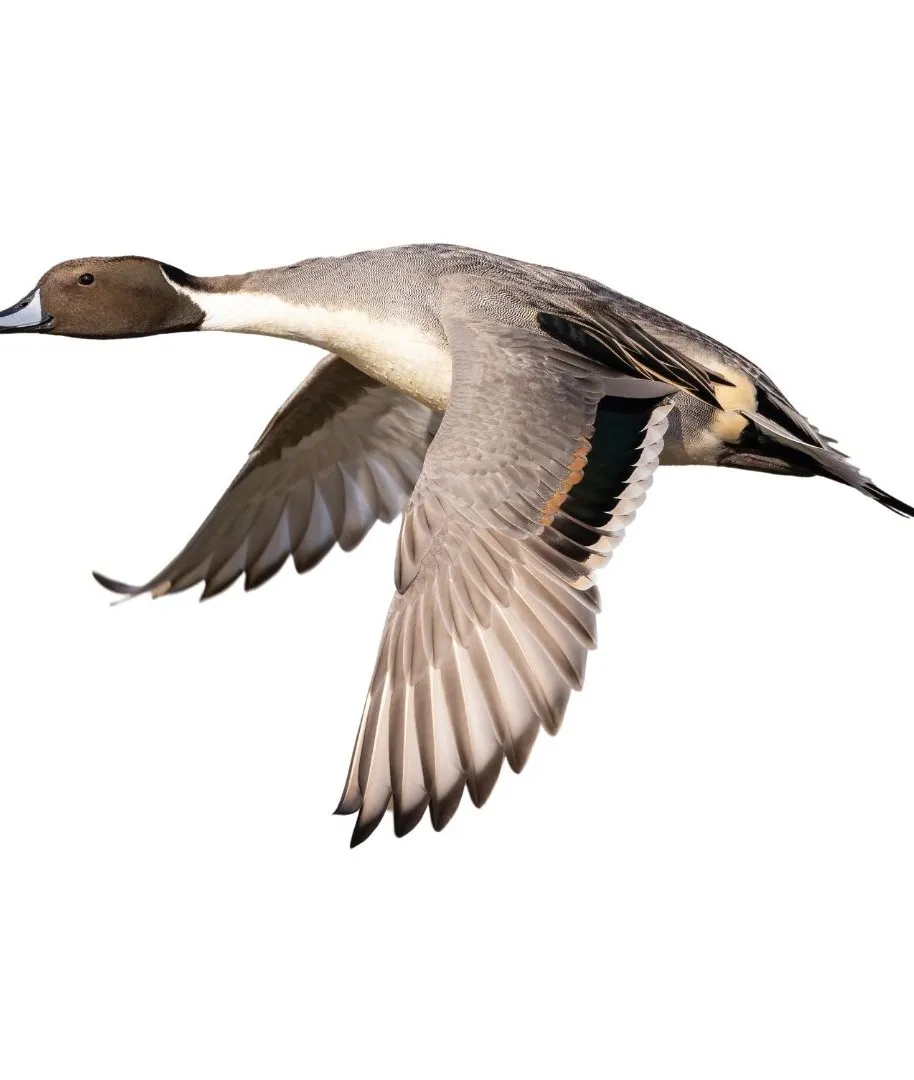
A wigeon is compact and short-necked, with a round head, and the drake shows a bold white upperwing patch. A Pintail is slim and long-necked with a pointed tail held high.
American Wigeon vs Mallard Hen
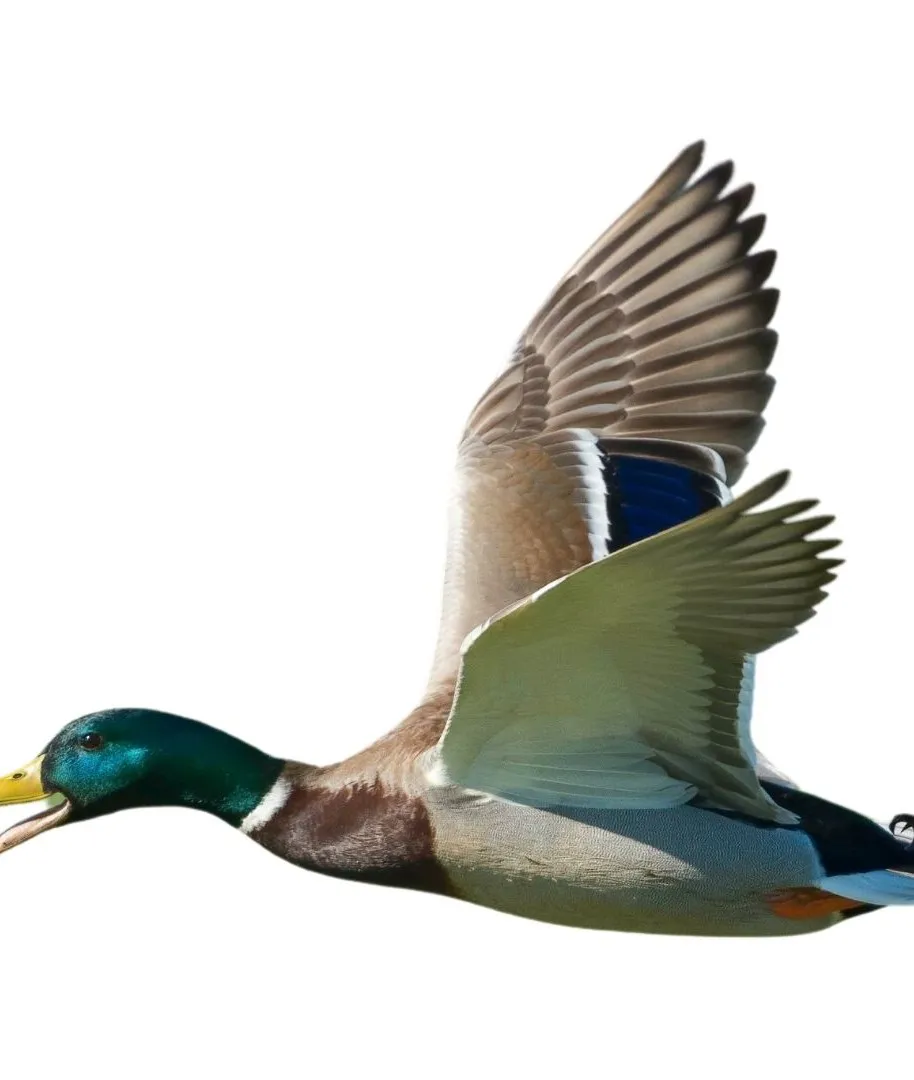
The wigeon hen's bill is short, gray and black-tipped, and her forewing shows a whitish patch. A hen Mallard is larger, with an orange-and-black bill and a blue speculum bordered in white.
American Wigeon vs Green-winged Teal
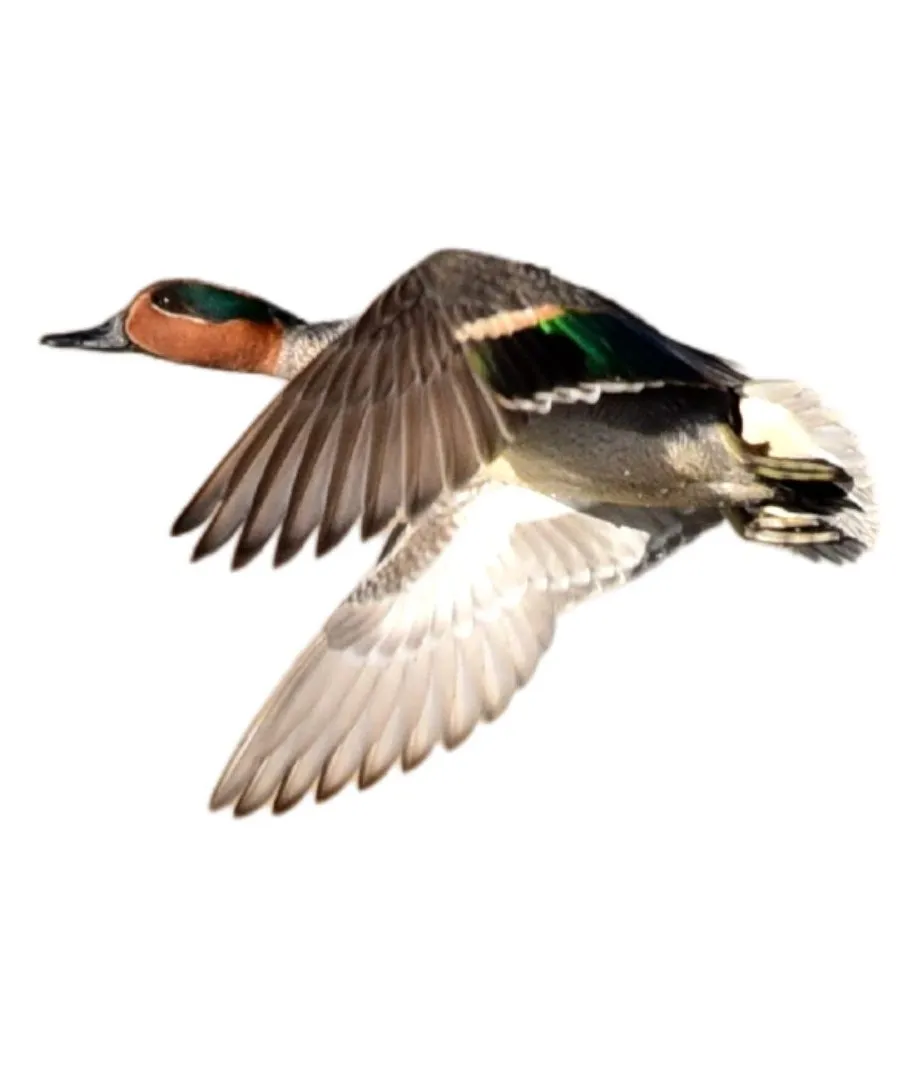
The smallest dabbler, a Green-winged rides high, with a chestnut head and a green swoop behind the eye. A wigeon drake wears a white cap instead.
American Wigeon vs Northern Shoveler
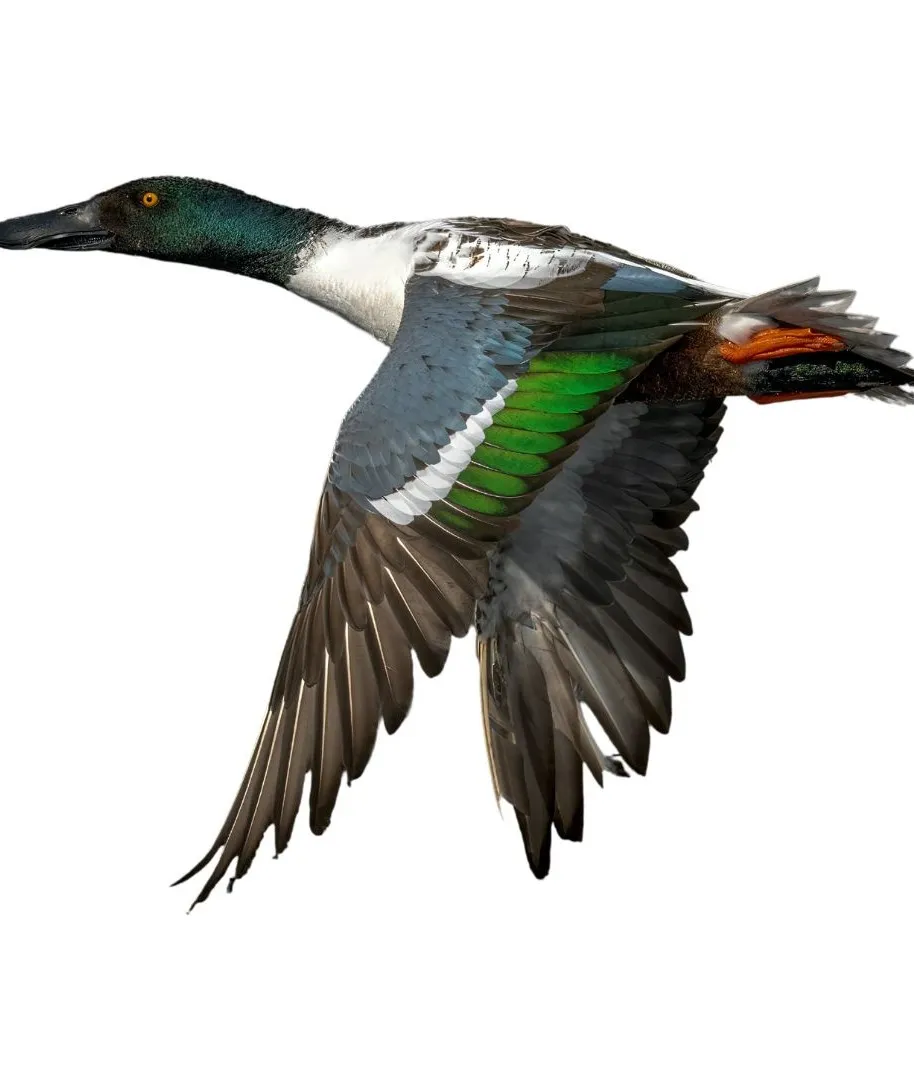
A shoveler drake pairs a dark green head with a white chest and chestnut sides and no white cap. The spoon-shaped bill shows at any range and rides low in flight.
Habitat
Primary Habitat. American Wigeon use shallow freshwater wetlands with submerged and emergent plants: marshes, ponds, lakes, sloughs and slow rivers. Farm fields and short grass close to the water matter, because wigeon are grazers as much as dabblers. In towns they use parks, pastures and golf courses.
Seasonal Habitat Differences. They breed on sloughs, ponds, small lakes and boreal wetlands, and on open tundra near river deltas, with brush and grass on dry ground nearby. The hen nests 40 to 1,000 ft from water. In migration and winter they add reservoirs, impoundments, flooded fields, estuaries, bays, tidal flats and saltwater marshes.
What to Look For. Leafy submerged plants such as pondweed and wigeon grass, open water for rafting, and short-grass fields or flooded stubble close by. Flooded rice fields hold several times the birds that dry ones do. Under pressure they sit on large open water or estuaries by day.
Is the American Wigeon Good to Eat?
American Wigeon are mild-flavored ducks. The Missouri Department of Conservation names wigeons with Mallards, teal, Gadwalls and Northern Pintails as grain eaters that generally taste milder than diving ducks and shovelers. Birds of the World says no other dabbler eats as many plants: pondweed, wigeon grass, eelgrass, pasture grass and clover, plus waste rice and wheat. For cleaning, the same department advises filleting the breasts and rinsing out the blood until the water runs clear.
Frequently Asked Questions
How do you identify an American Wigeon?
Look for a round head and a short, pale gray bill tipped black. The drake has a white forehead and crown with a broad green patch behind the eye, and a bold white upperwing patch over a green speculum in flight. A hen is warm brown with a gray-washed head and a dusky patch at the eye. Both have a white belly.
How rare is an American Wigeon?
Common and widespread: the 2026 USFWS breeding estimate is about 2.9 million, close to the 2.6 million long-term average. Over half of the midwinter count sits in the Pacific Flyway, with California's Central Valley and the Texas Gulf Coast holding the largest groups, and the Atlantic Flyway has only about 4 percent.
Are American Wigeon good to eat?
Yes, American Wigeon are among the milder-tasting ducks. Outside the nesting season they live mostly on plants, grazing pasture grass and leafy water plants and gleaning waste grain in fields. Missouri's conservation magazine contrasts that diet with the fish and invertebrates that give diving ducks and shovelers a stronger flavor.
How do you tell an American Wigeon from a Eurasian Wigeon?
On the drake, look at the head: an American has a white crown and a green patch behind the eye, where a Eurasian has a russet-red head with a cream stripe. An American's flanks are pinkish-brown, a Eurasian's gray. Hens are harder, but the armpit feathers are almost pure white on an American and gray-speckled on a Eurasian.
How do you tell a drake American Wigeon from a hen?
The drake has a white forehead and crown, a green patch behind the eye, pinkish-brown flanks and a bold white upperwing patch. The hen is a warm brown, gray-headed bird with a dark smudge at the eye, and her white shoulder patch and speculum are duller and smaller than his. An eclipse drake resembles a hen but keeps his white upperwing coverts.
What does an American Wigeon sound like?
An American Wigeon drake gives a slow, high, three-note whistle, written "fi-ew-whew", with the middle note highest. The hen does not whistle: she growls with a harsh, grating "kaow kaow" or "errr errr". Drakes whistle all year, and fall and winter flocks are noisy, so the whistle often gives a flock away before you see it.
In the Field
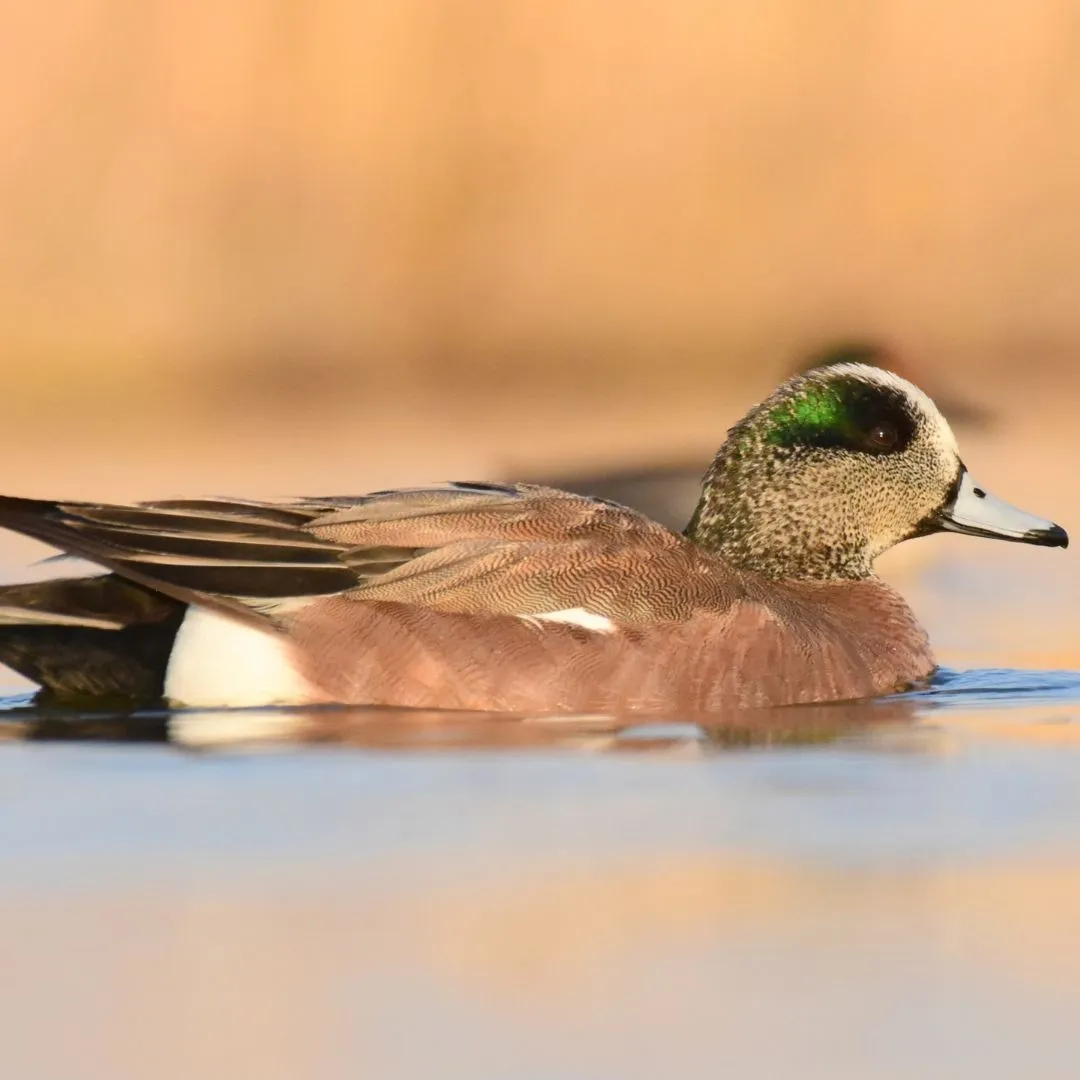
Photo: Tom Koerner/USFWS 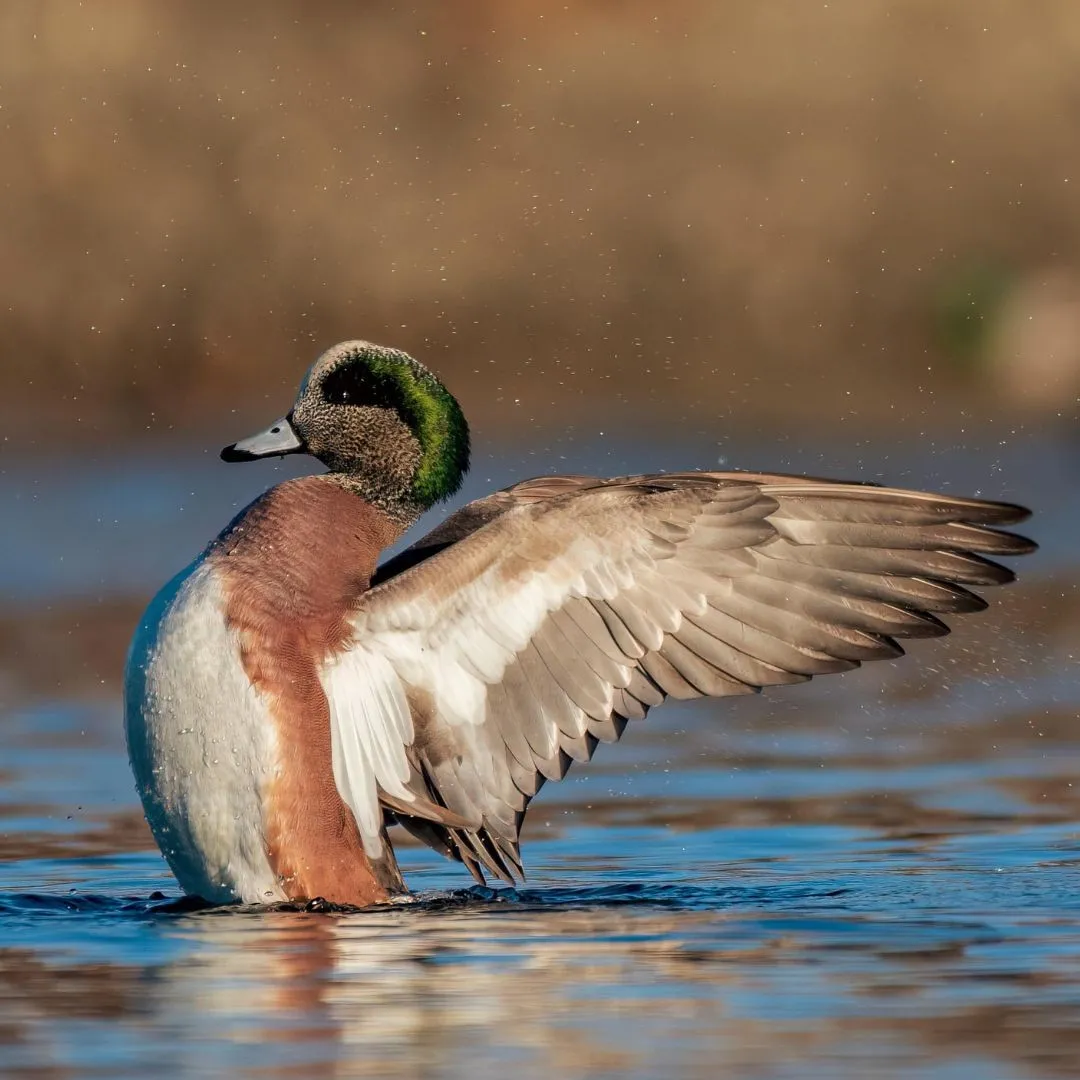
Photo: Frank Cone 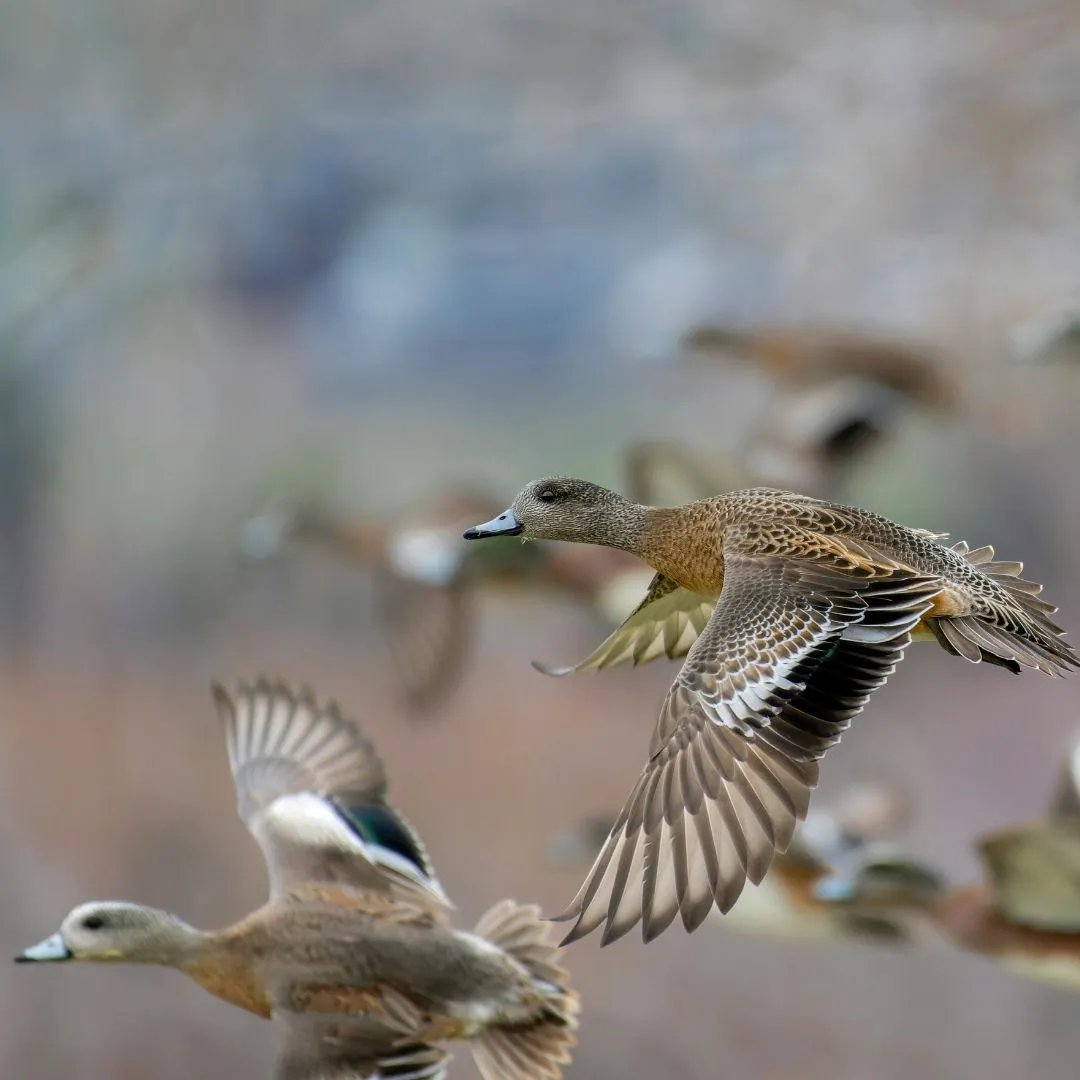
Photo: Frank Cone
Related Species
- DabblerComing SoonEurasian WigeonMareca penelope
 DabblerGadwallMareca strepera
 DabblerNorthern PintailAnas acuta
 DabblerMallardAnas platyrhynchos
 DabblerGreen-winged TealAnas crecca
 DabblerNorthern ShovelerSpatula clypeata